A robust safety culture is built on learning from events that could have happened, not just those that did. Using a standardized Near Miss Incident Report Template is one of the most effective ways for an organization to capture these invaluable learning opportunities. A near miss, often called a "close call," is an unplanned event that did not result in injury, illness, or damage, but had the potential to do so. It's a free lesson in risk management, offering a clear warning of a system flaw or hazardous condition that needs to be addressed before it leads to a real accident.
Ignoring these events is like ignoring the smoke before the fire. Each unreported near miss represents a missed chance to prevent future harm. When employees are empowered and encouraged to report these close calls without fear of reprisal, they become the eyes and ears of the safety program. This proactive approach shifts the focus from reacting to incidents to preventing them altogether. The data collected from these reports provides a goldmine of information, revealing patterns and underlying issues that might otherwise go unnoticed until it's too late.
A well-designed reporting system transforms workplace safety from a top-down mandate into a collaborative effort. It fosters a culture of open communication where every team member feels responsible for their own safety and the safety of their colleagues. The goal isn't to assign blame but to understand the "why" behind the event. By systematically investigating near misses, companies can identify and implement corrective actions that strengthen their safety protocols, improve training, and create a genuinely safer working environment for everyone.
This comprehensive guide will explore the critical components of an effective near miss report, explain why this process is essential for any proactive safety program, and provide a practical template you can adapt for your organization. We will delve into how to implement a successful reporting system, overcome common barriers to employee participation, and ultimately use this powerful tool to prevent accidents before they happen.
What is a Near Miss?
In the context of workplace safety, a near miss is an incident where no property was damaged and no personal injury was sustained, but where, given a slight shift in time or position, damage or injury could have easily occurred. Think of it as a potential accident that was narrowly avoided. These events are crucial leading indicators, signaling weaknesses in a safety system that could lead to future, more severe incidents.
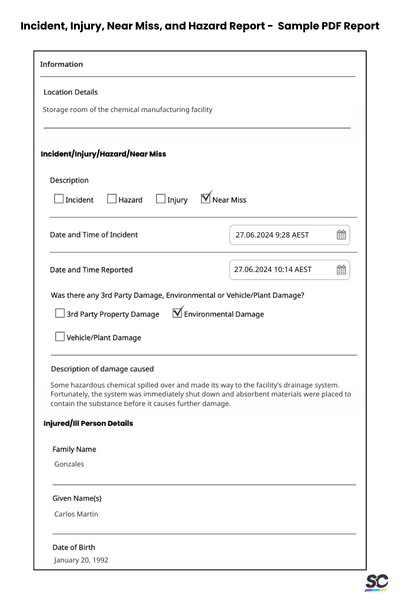
The terms near miss, incident, and accident are often used interchangeably, but they have distinct meanings:
* Near Miss: An event that did not cause harm but had the potential to do so. For example, a heavy box falling from a shelf and landing an inch away from a worker's foot.
* Incident: A broader term that includes near misses as well as events that do result in minor injury or damage. For example, the same box falls and bruises the worker's foot. It's an unplanned event that could or does result in harm.
* Accident: An unplanned event that results in significant injury, illness, or property damage. For example, the box falls and breaks the worker's foot, requiring medical attention and time off work.

Understanding this distinction is key. While all accidents are incidents, not all incidents result in injury. Near misses sit at the very beginning of this spectrum. By focusing on reporting and analyzing near misses, organizations can address hazards at their source, long before they escalate into accidents with devastating consequences.
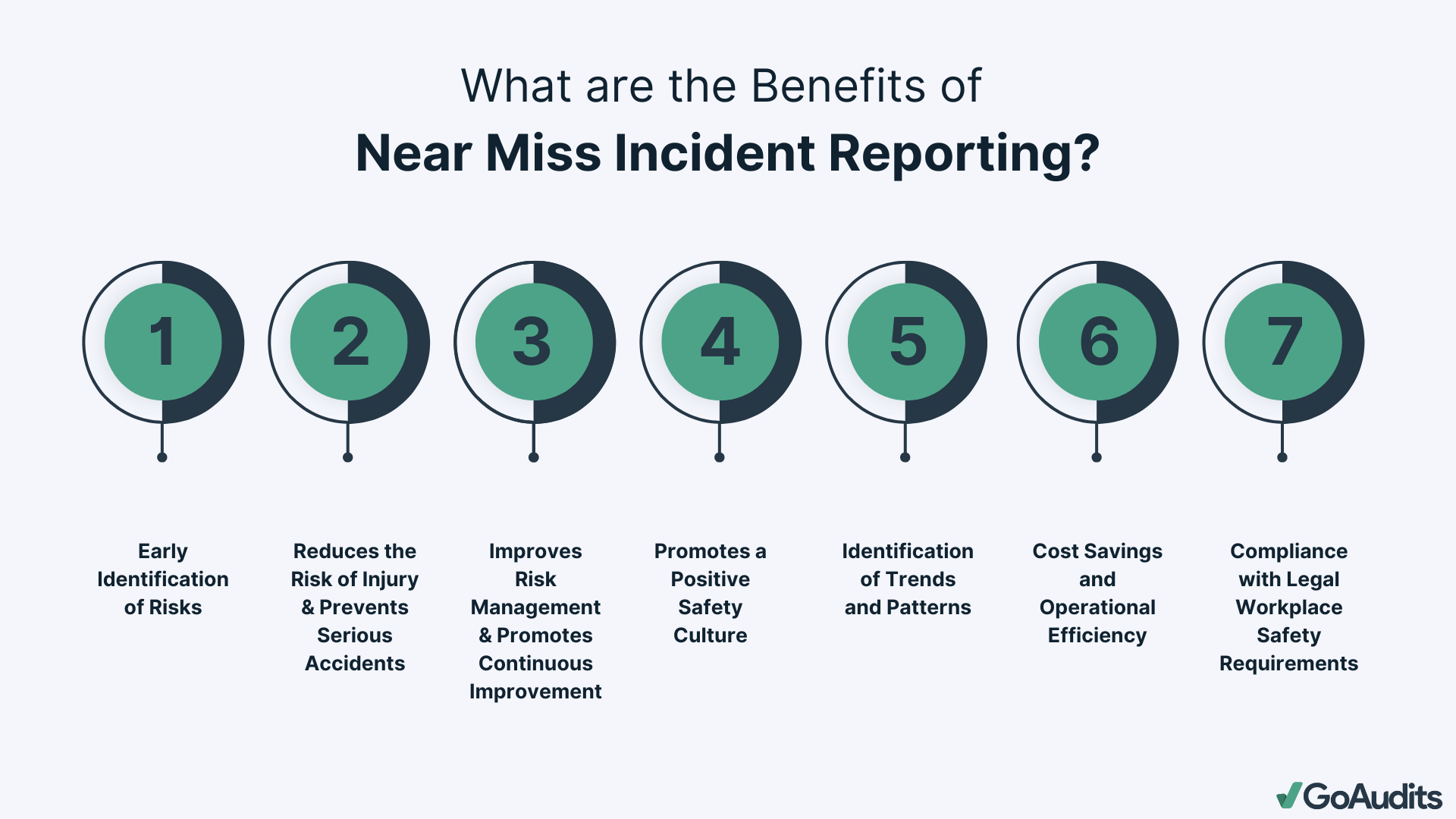
Why Reporting Near Misses is Crucial for a Proactive Safety Culture
A proactive safety culture is one that actively seeks out and mitigates risks before they cause harm, rather than simply reacting to accidents after they occur. A near miss reporting system is the cornerstone of this proactive approach. It provides tangible benefits that go far beyond simple compliance.

Identifies Hidden Hazards
Many workplace hazards are not immediately obvious. A near miss report can shine a light on unsafe conditions, faulty equipment, or flawed procedures that might otherwise go unnoticed. For instance, a report about an employee almost slipping on an unmarked wet floor can lead to improved housekeeping procedures and better signage, preventing a future fall that could cause serious injury.
Provides Valuable Data for Risk Assessment
Each near miss report is a data point. When aggregated, this data can reveal trends and patterns that are invisible on a case-by-case basis. An organization might discover that a particular piece of machinery is frequently involved in close calls, indicating a need for maintenance, redesign, or better operator training. This data-driven approach allows for targeted, effective safety interventions.
Prevents Serious Incidents and Accidents
This is the most significant benefit. Heinrich's "Safety Triangle" theory suggests that for every major injury, there are dozens of minor injuries and hundreds of no-injury incidents (near misses). By investigating and correcting the causes of the hundreds of near misses, you effectively eliminate the opportunities for more severe accidents to happen. It's the ultimate form of prevention.
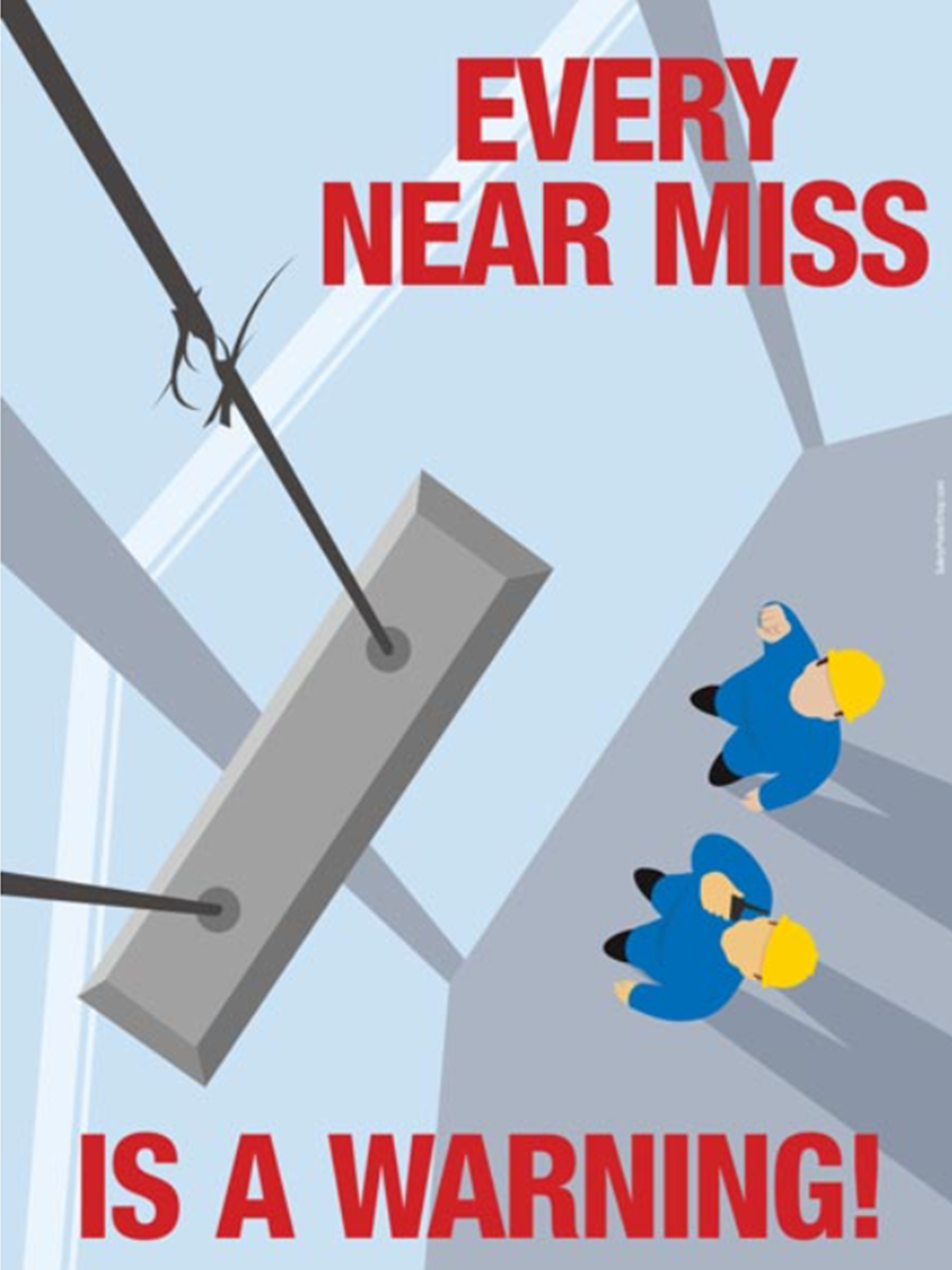
Fosters Employee Engagement and Ownership
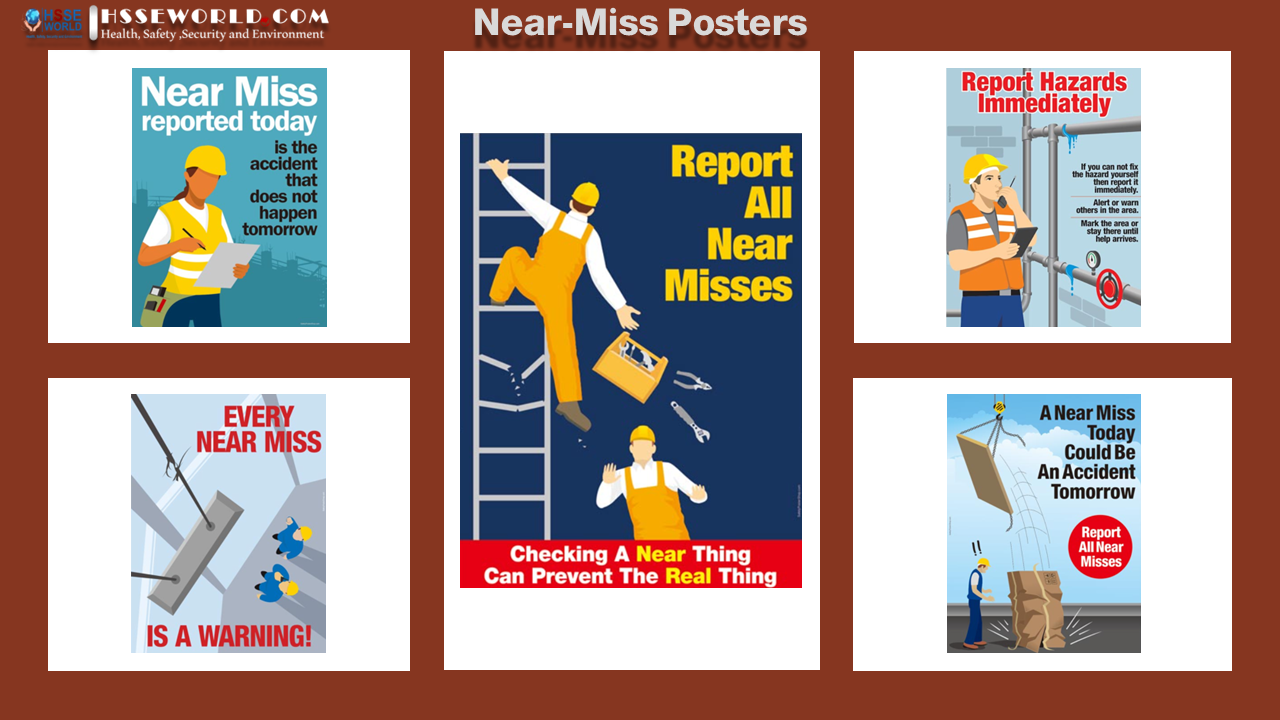
When employees see that their near miss reports are taken seriously and lead to positive changes, they become more engaged in the safety program. It sends a powerful message that their observations are valued. This creates a sense of shared responsibility for safety, where everyone is actively looking out for potential hazards and feels empowered to speak up. A non-punitive policy is essential here; employees must feel safe reporting without fear of blame or disciplinary action.

Key Components of an Effective Near Miss Incident Report Template
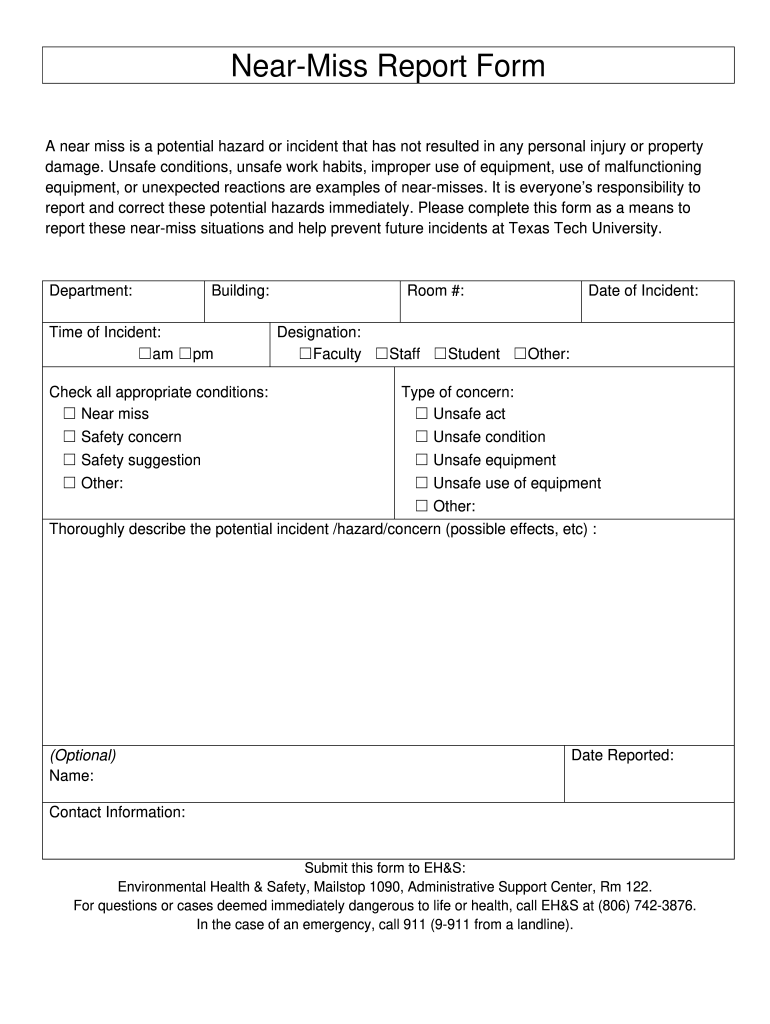
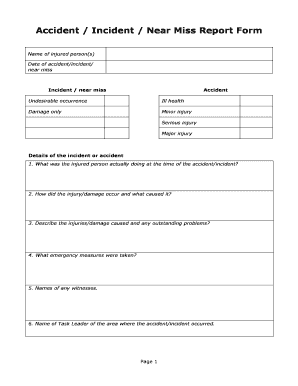
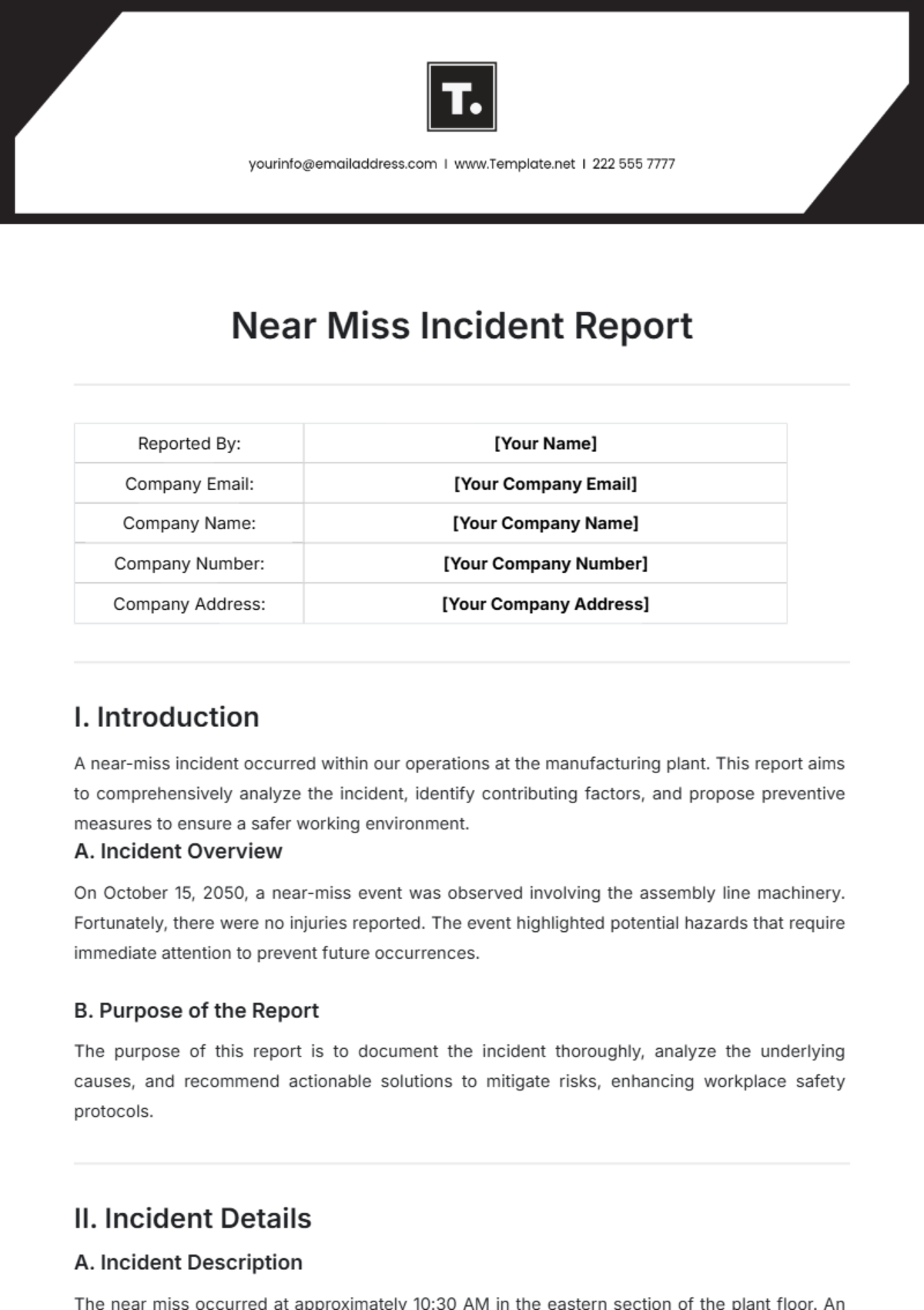
A well-structured template ensures that all necessary information is captured consistently and clearly. It guides the reporter through the process, making it simple to provide a complete picture of the event. Here are the essential sections to include in your Near Miss Incident Report Template.
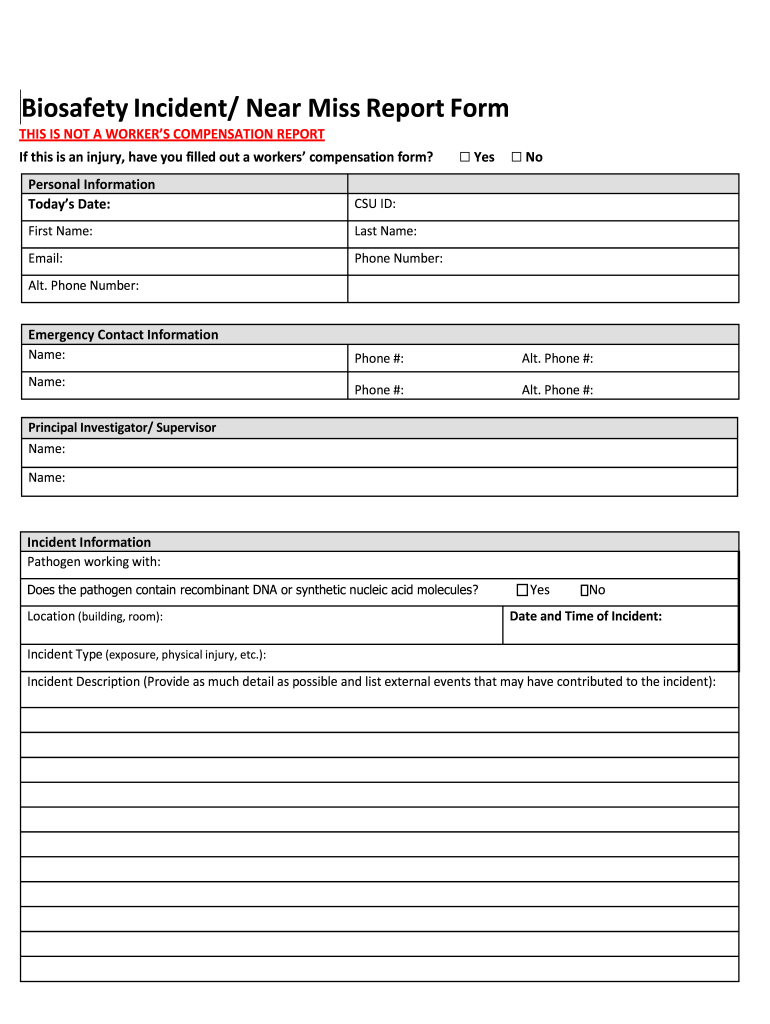
Basic Information
This section captures the fundamental "who, where, and when" of the event. It sets the context for the investigation.
* Date of Event: The exact date the near miss occurred.
* Time of Event: The specific time it happened.
* Location: The precise area where the event took place (e.g., "Warehouse Bay 3, near the loading dock").
* Department/Work Area: The department responsible for the location.
* Name of Person(s) Involved (Optional): While useful, it's crucial to allow for anonymous reporting to encourage participation.
* Name of Reporter: The person filling out the form.
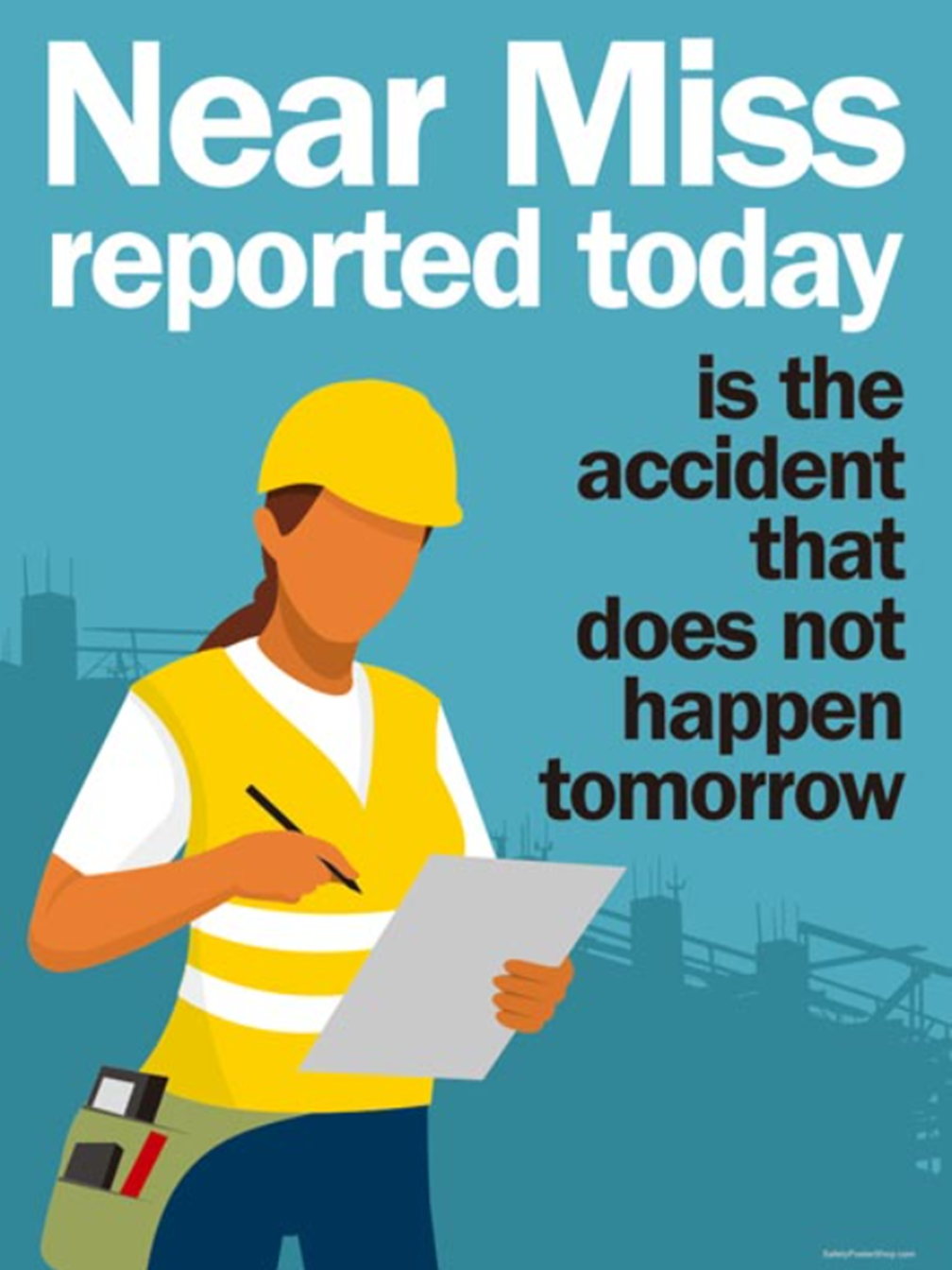
Detailed Description of the Event
This is the narrative portion of the report. The goal is to get a clear, factual, and chronological account of what happened.
* Sequence of Events: Ask the reporter to describe, step-by-step, what led up to the near miss, what happened during the event, and what occurred immediately after.
* Objective Language: Encourage the use of objective, factual language. For example, instead of "The forklift driver was reckless," use "The forklift turned the corner without sounding its horn." The focus should be on actions and conditions, not on assigning blame.
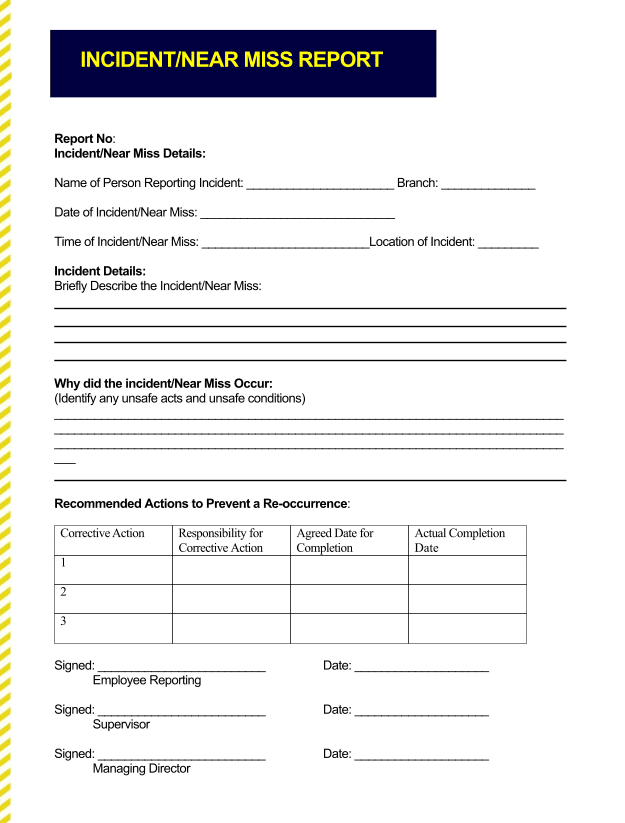
Immediate Causes and Contributing Factors
This section digs deeper to understand the "why" behind the event. It's helpful to distinguish between immediate and underlying causes.
* Unsafe Conditions: What environmental or physical factors contributed? (e.g., poor lighting, slippery floor, missing machine guard, cluttered walkway).
* Unsafe Acts: What actions or behaviors played a role? (e.g., not following procedure, using equipment improperly, rushing, not wearing proper PPE).
* Root Causes (for investigator): While the initial reporter may not know these, this section is for the safety team to analyze deeper issues like inadequate training, poor supervision, lack of maintenance, or flawed work processes.
Potential Consequences
This is a critical section that highlights the severity of what was avoided. It helps management understand the importance of the report.
* Describe What Could Have Happened: Ask the reporter to describe the worst-case scenario. For example, "If the employee had been standing two feet to the left, the falling crate could have caused a severe head injury or fatality."
* Potential Harm: Could it have resulted in a minor injury, serious injury, fatality, equipment damage, or environmental release?
Immediate Actions Taken
This documents the immediate response to the near miss, which is important for both safety and the investigation.
* Securing the Area: What was done to make the situation safe right away? (e.g., "The spill was cleaned up," "A warning sign was placed," "The faulty machine was taken out of service").
* First Aid (if applicable): Note if any precautionary first aid was administered, even if no injury was apparent.
Recommendations for Corrective Action
This section empowers the reporter to be part of the solution.
* Employee Suggestions: Ask for ideas on how to prevent this from happening again. Employees on the front line often have the most practical and effective solutions.
* Examples: "Install a convex mirror at the blind corner," "Update the lockout/tagout procedure for this machine," "Require safety glasses to be worn in this area at all times."

How to Implement a Near Miss Reporting System
Having a great template is only the first step. A successful near miss program depends on a well-planned implementation strategy that encourages participation and ensures follow-through.
Develop a Clear, Non-Punitive Policy
The single most important factor for a successful program is a non-punitive policy. Employees must trust that they will not be disciplined or blamed for reporting a near miss, even if it involves their own error. The policy should be clearly written, communicated to all employees, and consistently enforced by management. It should define what a near miss is and explicitly state the organization's commitment to using the reports for learning and improvement, not for punishment.
Make Reporting Easy and Accessible
If the reporting process is complicated or time-consuming, employees won't use it. The barrier to entry must be as low as possible.
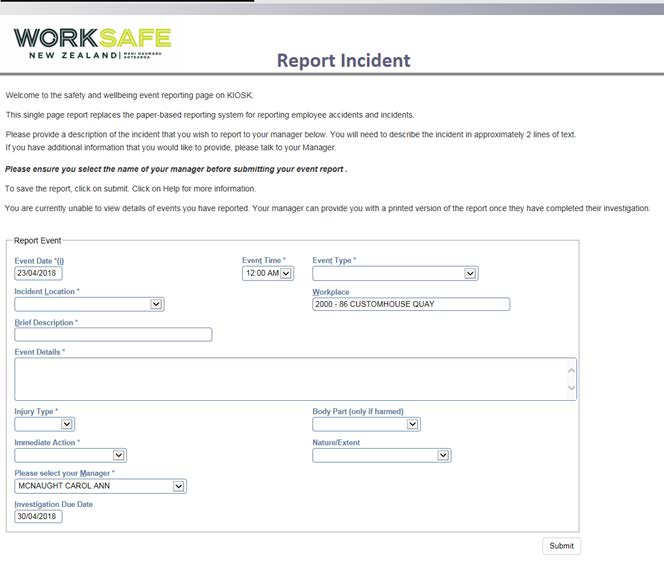
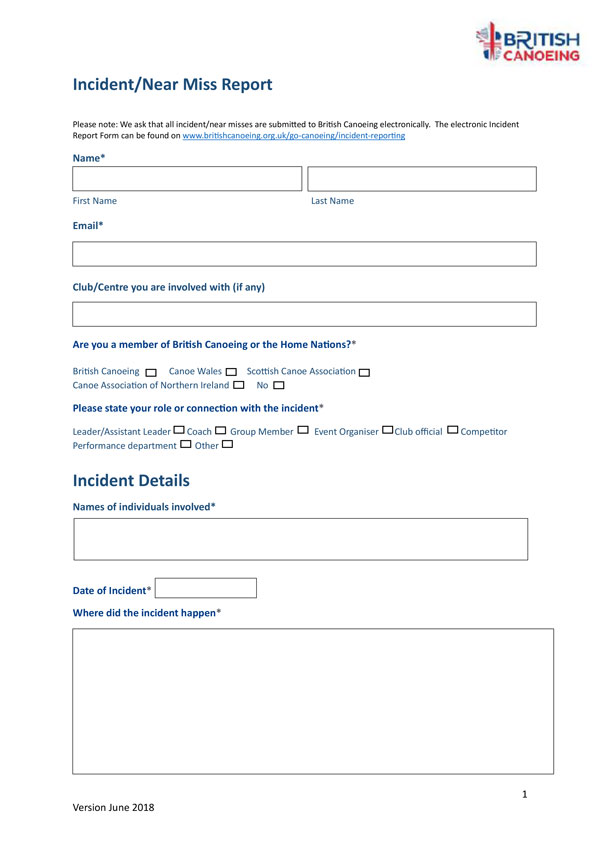
* Multiple Formats: Offer both paper forms and digital options. Paper forms can be placed in common areas like break rooms and tool cribs. A simple digital form accessible via a computer, tablet, or smartphone QR code can significantly increase reporting rates.
* Keep it Simple: The form should be straightforward and take only a few minutes to complete. Avoid jargon and overly complex questions. The template described in the previous section covers the essentials without being overwhelming.
Train Your Employees and Supervisors
You cannot expect people to report near misses if they don't know what they are or why it's important.
* Initial Training: Conduct training sessions for all employees to explain the purpose of the program, define a near miss with clear examples, and walk them through how to fill out the report form.
* Supervisor Buy-In: Supervisors are critical. They must be trained to encourage reporting from their teams, respond positively to reports, and assist employees with filling out forms if needed. If a supervisor dismisses a concern, the program will fail.
* Ongoing Reinforcement: Regularly discuss near misses in safety meetings, share success stories of how reports have led to improvements, and keep the topic top of mind.
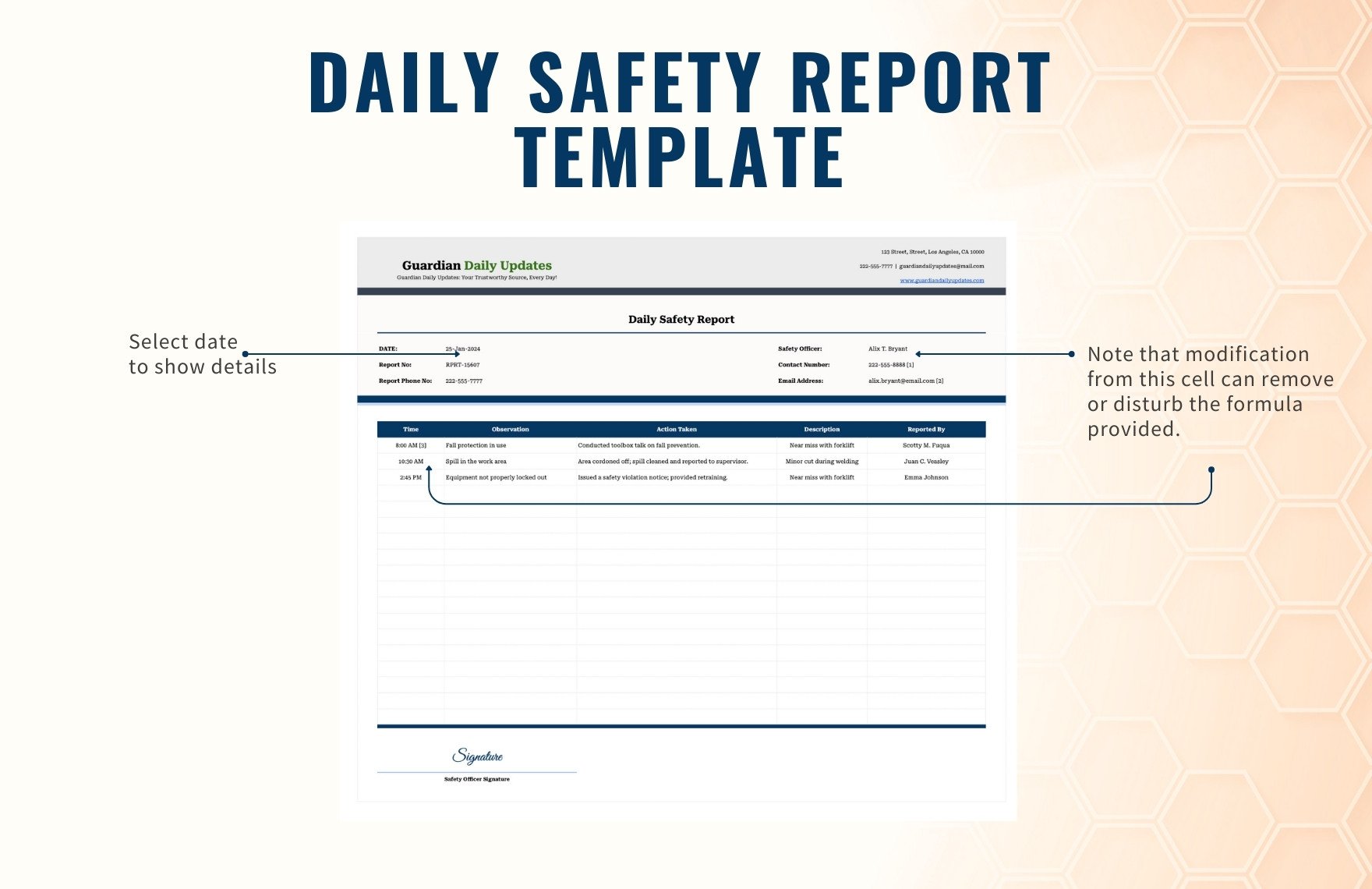
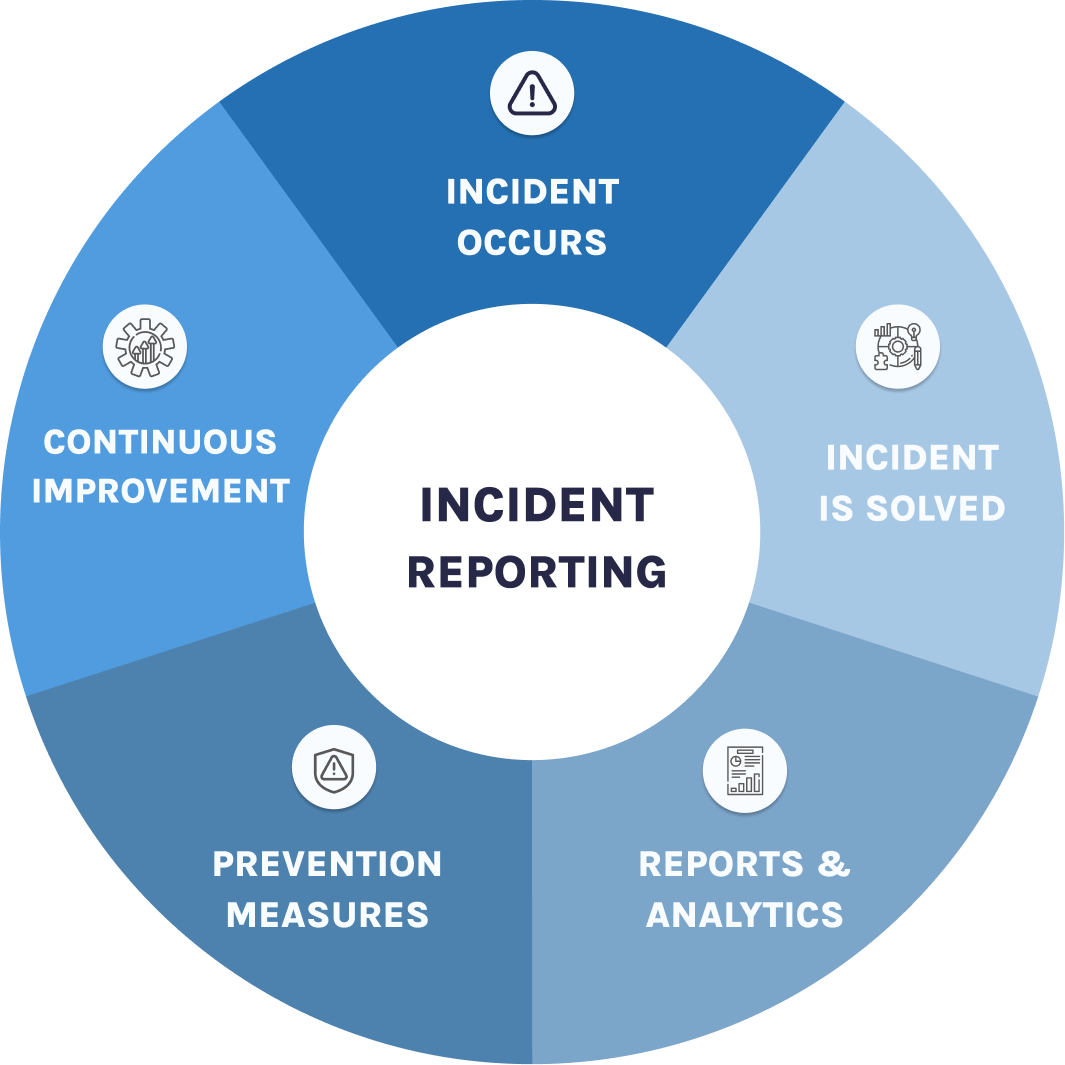
Follow Up and Communicate Results
This step closes the loop and proves to employees that their efforts matter.
* Acknowledge Every Report: Thank the employee for submitting the report. This simple act provides positive reinforcement.
* Investigate and Act: Every near miss should be investigated to determine its root cause. Implement corrective and preventive actions (CAPAs) to address the identified hazards.
* Share the Outcome: Communicate the results of the investigation and the changes that were made back to the entire workforce. Post updates on a safety bulletin board, discuss them in meetings, or send out a newsletter. When people see that their report about a frayed electrical cord led to a company-wide cord inspection and replacement program, they are motivated to report again.
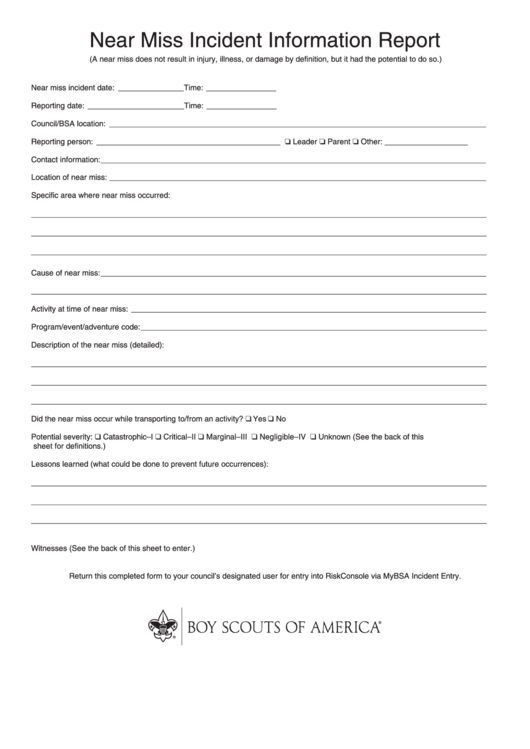
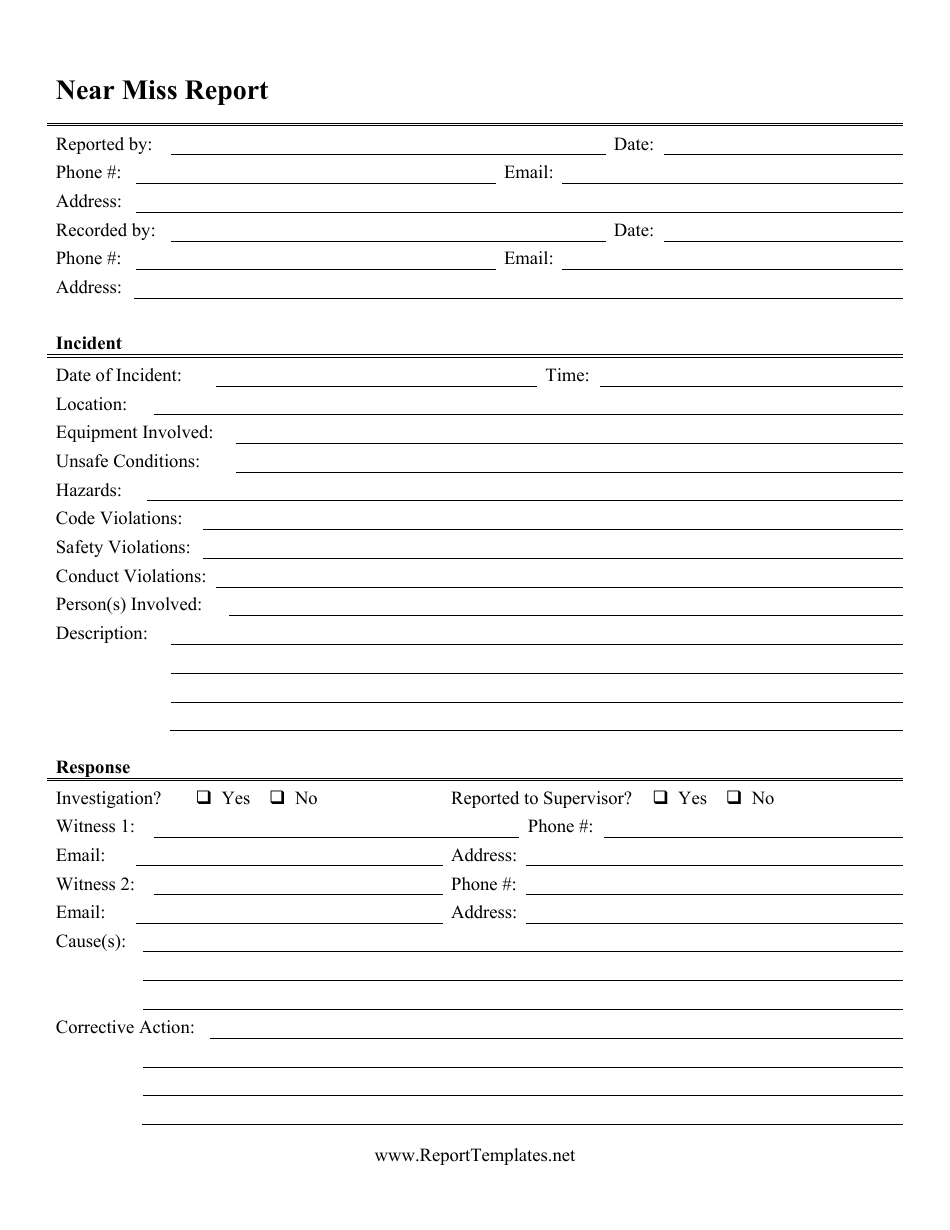
Sample Near Miss Incident Report Template
Here is a basic template structure you can adapt for your organization.
Near Miss Incident Report
Section 1: Event Details
* Date of Event: _
* Time of Event:
* Specific Location: _
* *Department:*
* Report Submitted By (Optional): __
Section 2: Description of the Near Miss
(Please describe what happened in as much detail as possible. What were you or others doing? What was the sequence of events?)
Section 3: Potential Consequences
(If things had been slightly different, what could have happened? E.g., minor injury, serious injury, property damage, etc.)
Section 4: Causes (What do you think caused this near miss?)
* Unsafe Conditions (Environment/Equipment): __
* Unsafe Actions (Behaviors/Procedures): __
Section 5: Immediate Actions Taken
(What did you or others do immediately after the near miss to make the situation safe?)
Section 6: Suggestions for Prevention
(How can we prevent this from happening again?)
Overcoming Common Barriers to Near Miss Reporting
Even with a great system in place, you may encounter resistance. Understanding and addressing these common barriers is key to long-term success.
- Fear of Blame: This is the number one barrier. Employees worry they will be disciplined, especially if their own actions contributed to the near miss. The solution is a rock-solid, consistently communicated non-punitive policy. Management must lead by example, treating every report as a learning opportunity.
- Apathy or Skepticism: Some employees may think, "Why bother? Nothing will change." This is overcome by a robust follow-up and communication process. When employees see tangible improvements resulting from their reports, skepticism turns into engagement. Publicly recognizing employees who submit valuable reports can also help.
- Complexity: If the reporting form is a multi-page, complicated document, people won't fill it out. The solution is to keep the form simple, accessible, and quick to complete, as outlined above.
- Lack of Understanding: If employees don't know what a near miss is, they can't report it. The solution is clear, simple, and ongoing training with relatable, real-world examples specific to your workplace.
- Peer Pressure: In some workplace cultures, reporting a safety concern can be seen as "snitching" or causing trouble. This cultural issue must be addressed from the top down. Leadership must champion the program and frame reporting as an act of responsibility and care for one's colleagues.
Conclusion
A near miss is not a failure; it is a warning and a valuable gift. It provides a rare, consequence-free opportunity to identify and fix a problem before it causes real harm. By implementing a strong reporting system built around a clear and simple Near Miss Incident Report Template, you are not just collecting data; you are building the foundation of a world-class safety culture.
The success of such a program hinges on trust, simplicity, and follow-through. When you remove the fear of blame, make the reporting process effortless, and demonstrate a genuine commitment to acting on the information received, you empower every single employee to become an active participant in safety. This collaborative effort transforms your workplace from a reactive environment that cleans up after accidents to a proactive one that prevents them from ever happening. The journey to zero incidents begins with paying attention to the close calls.
0 Response to "Near Miss Incident Report Template"
Posting Komentar